

William De Morgan
William De Morgan (1839–1917) was the leading potter of the Arts and Crafts movement and a lifelong friend of William Morris and Edward Burne-Jones. His tiles, ruby lustre chargers and Persian-palette vases, painted with galleons, fantastic beasts, birds and flowers, are among the most admired British ceramics of the 19th century.
AD Antiques has dealt in De Morgan for over 30 years, from single tiles to major lustre pieces, and several pieces from our stock are due to be shown in “William De Morgan and His Fantastic Creatures” at the Holburne Museum, Bath (January–May 2027). Every piece is guaranteed as described, with a full condition report. Read our guide to De Morgan below the stock.
Subscribe for updates from AD Antiques
Tell us what you collect and we'll keep you posted.
Stock for sale
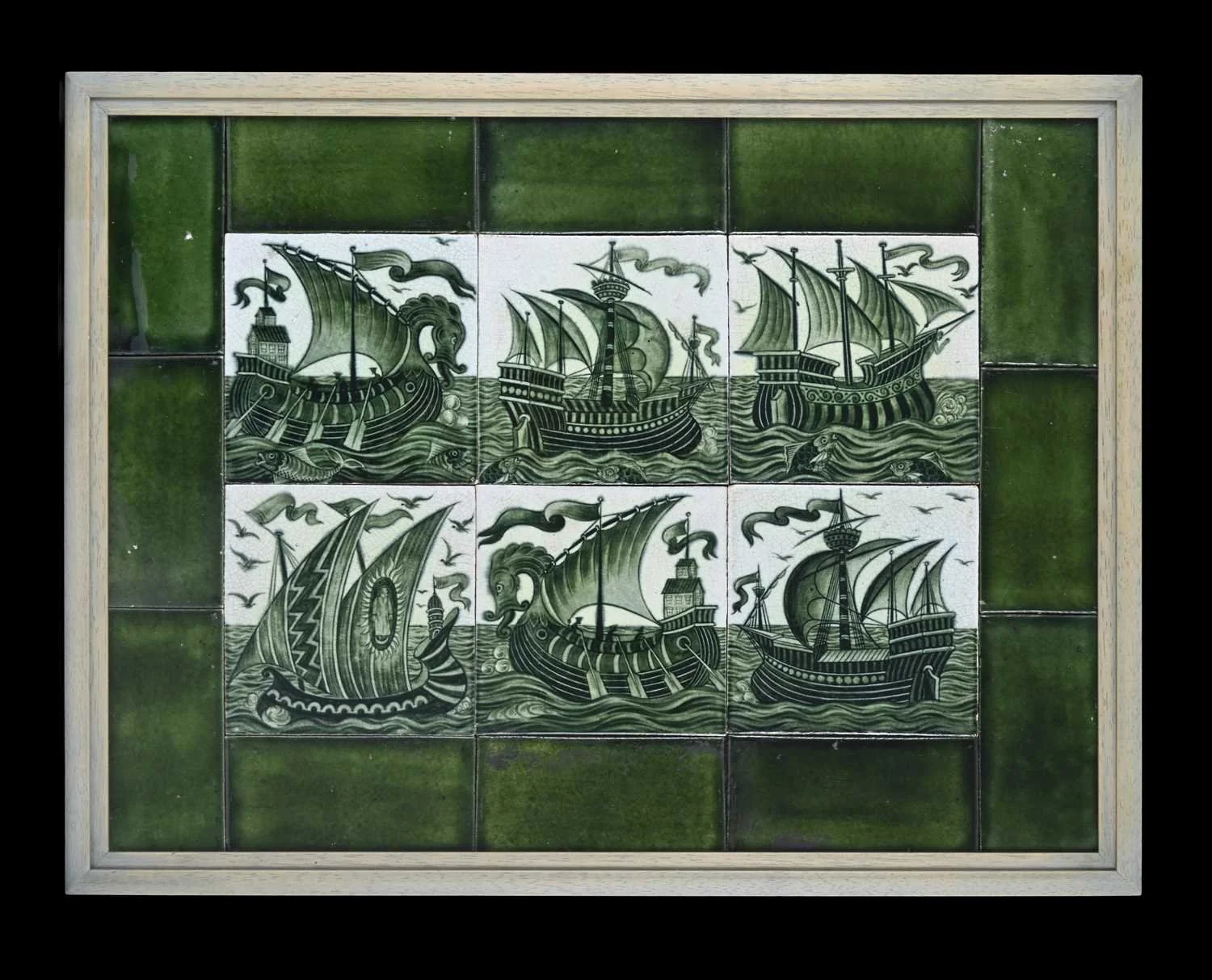
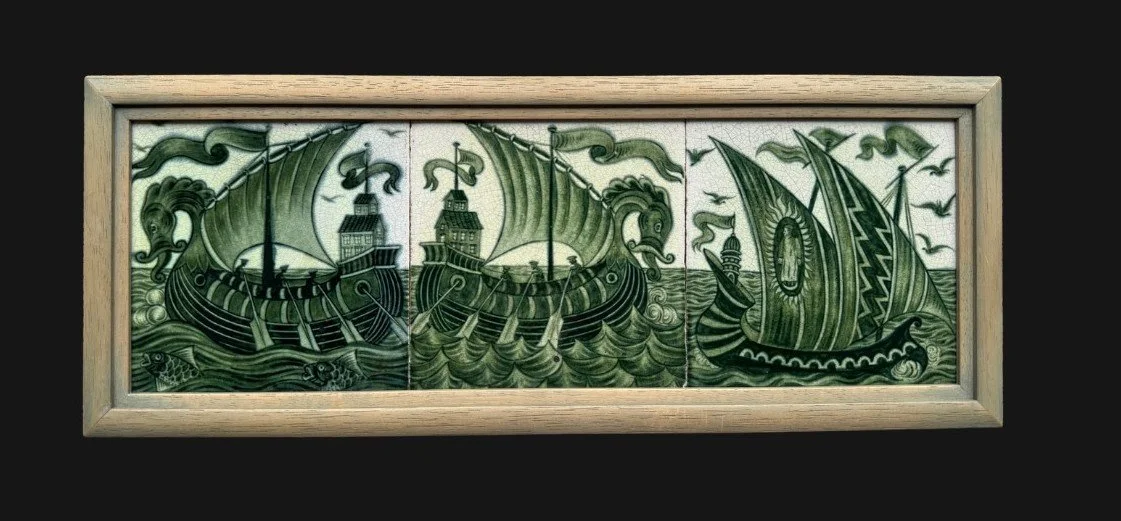
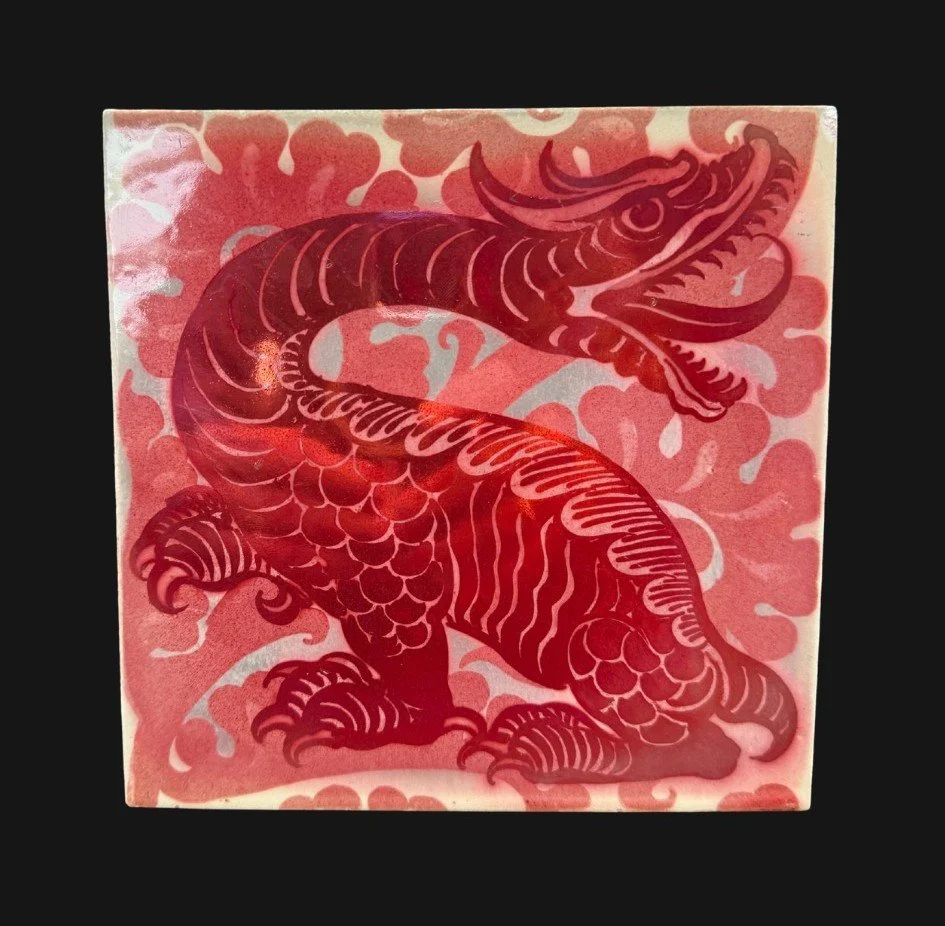
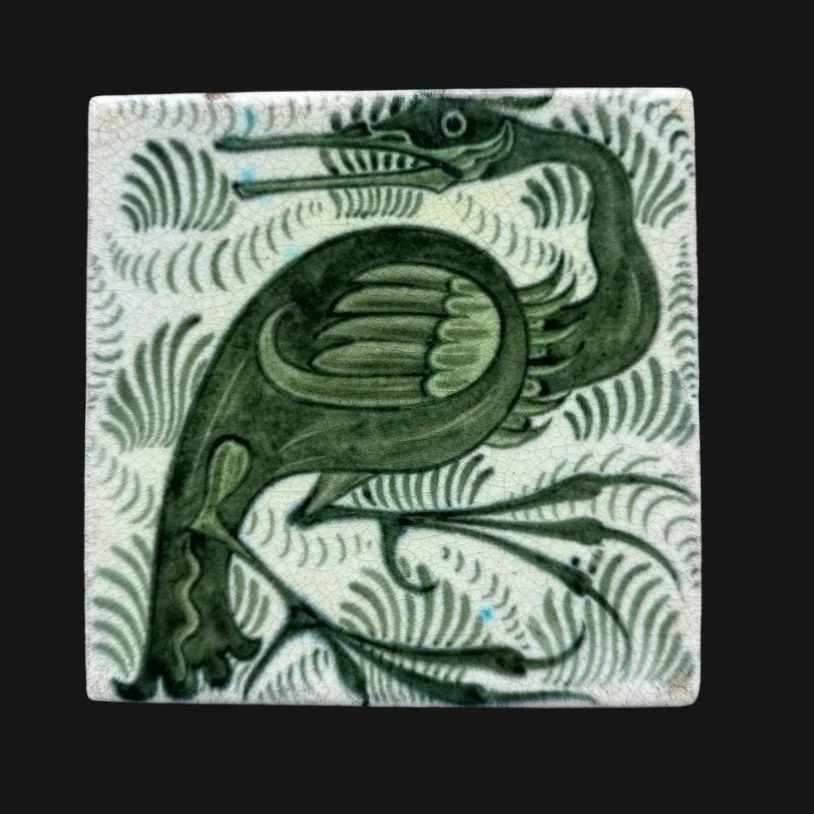
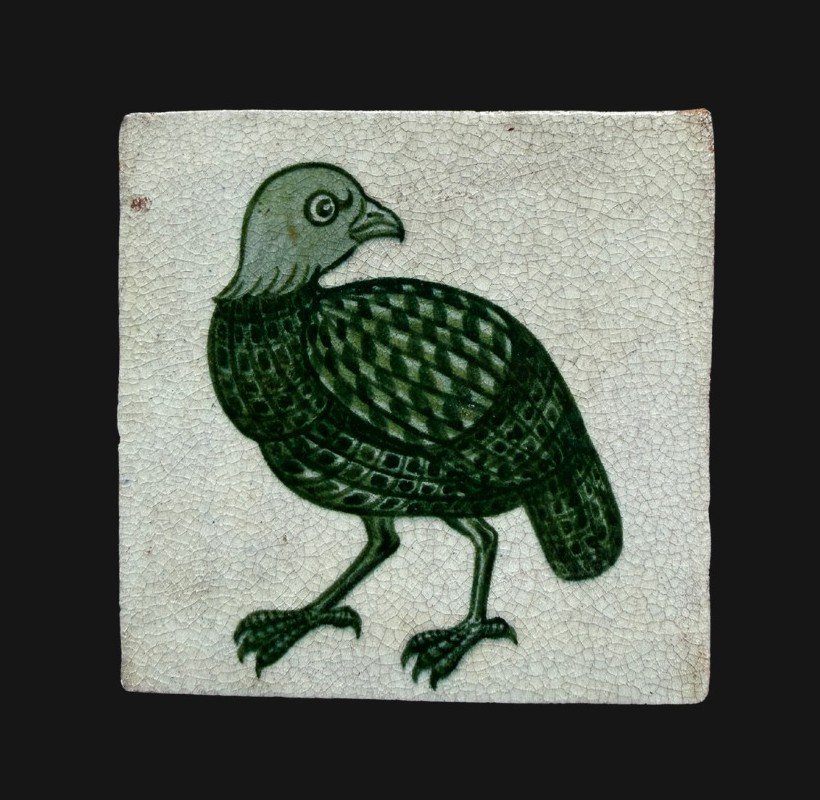
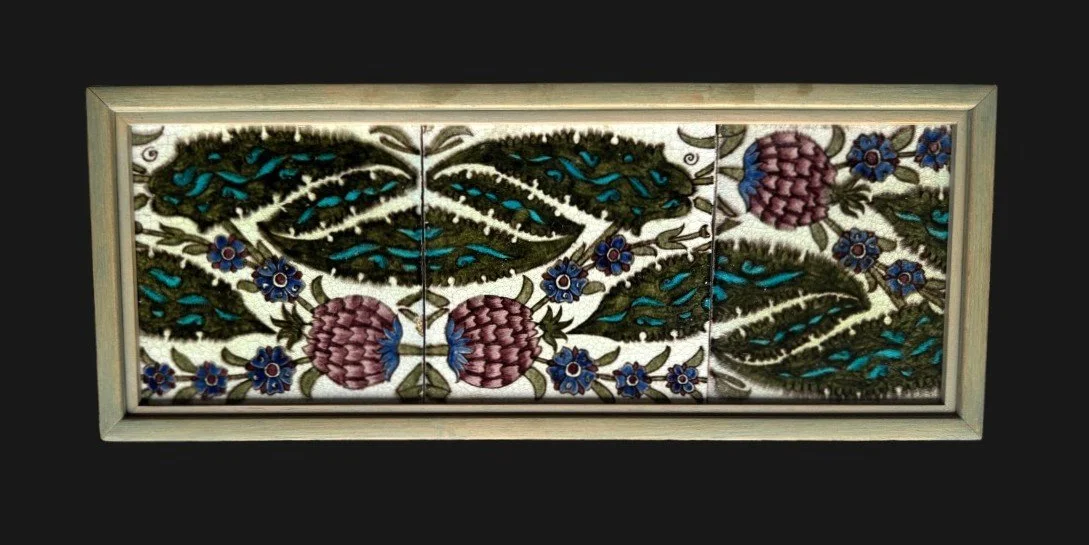
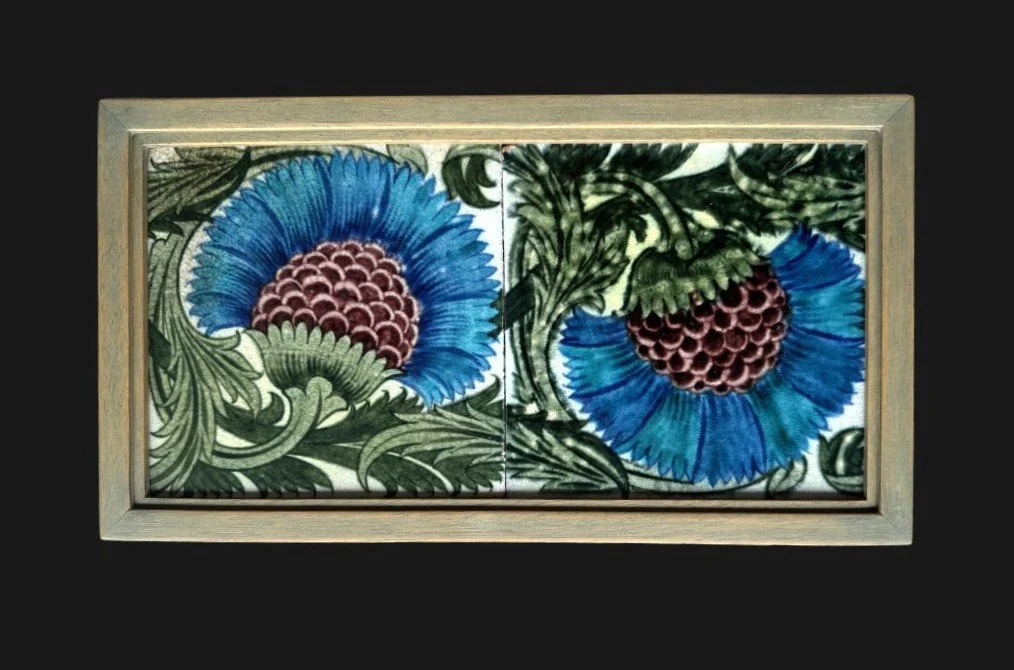
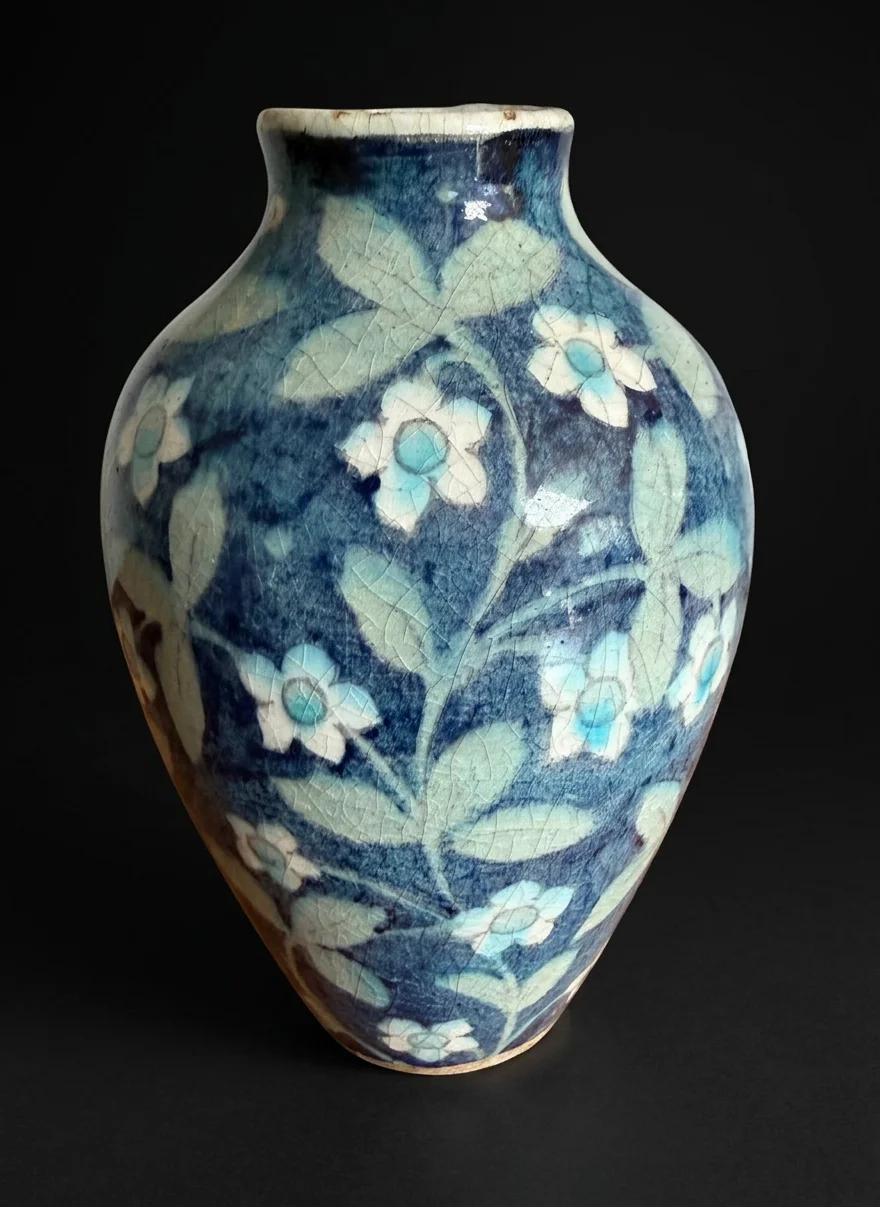


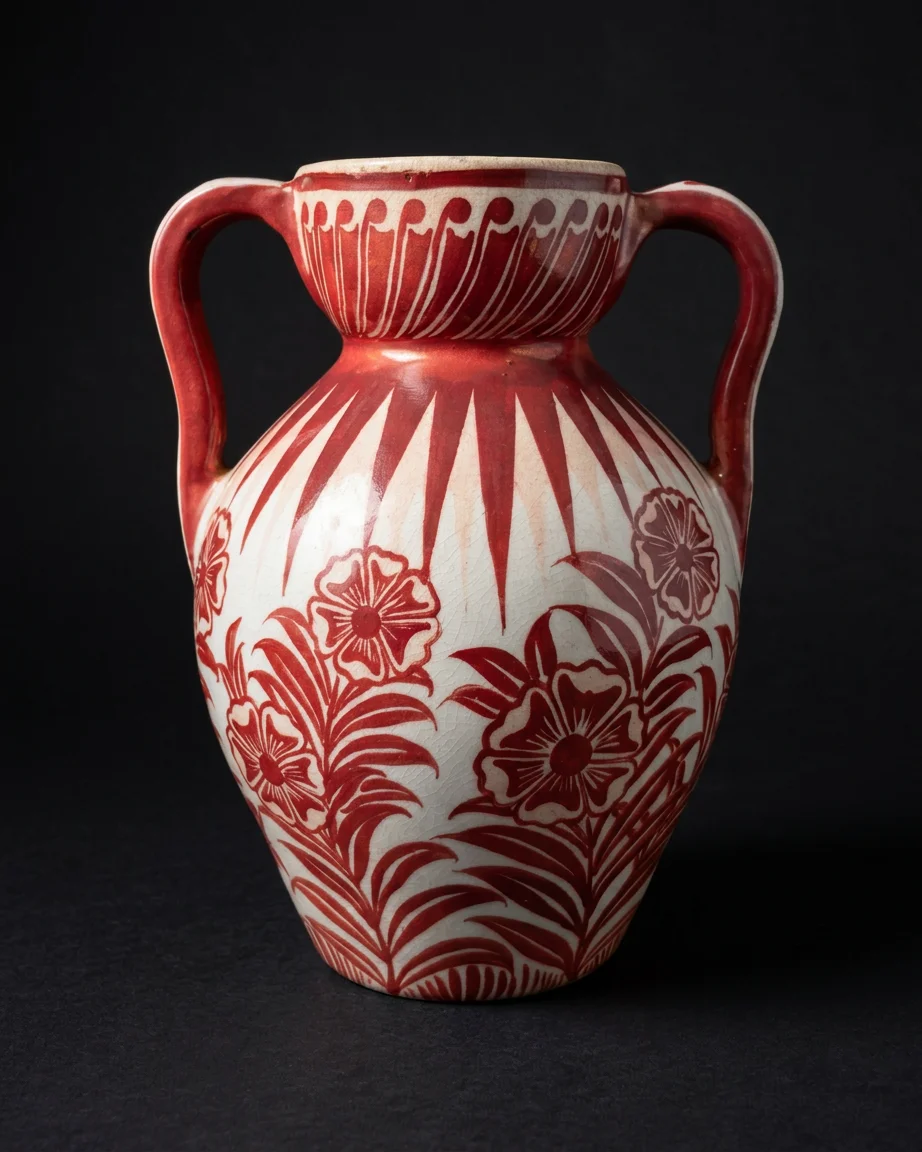


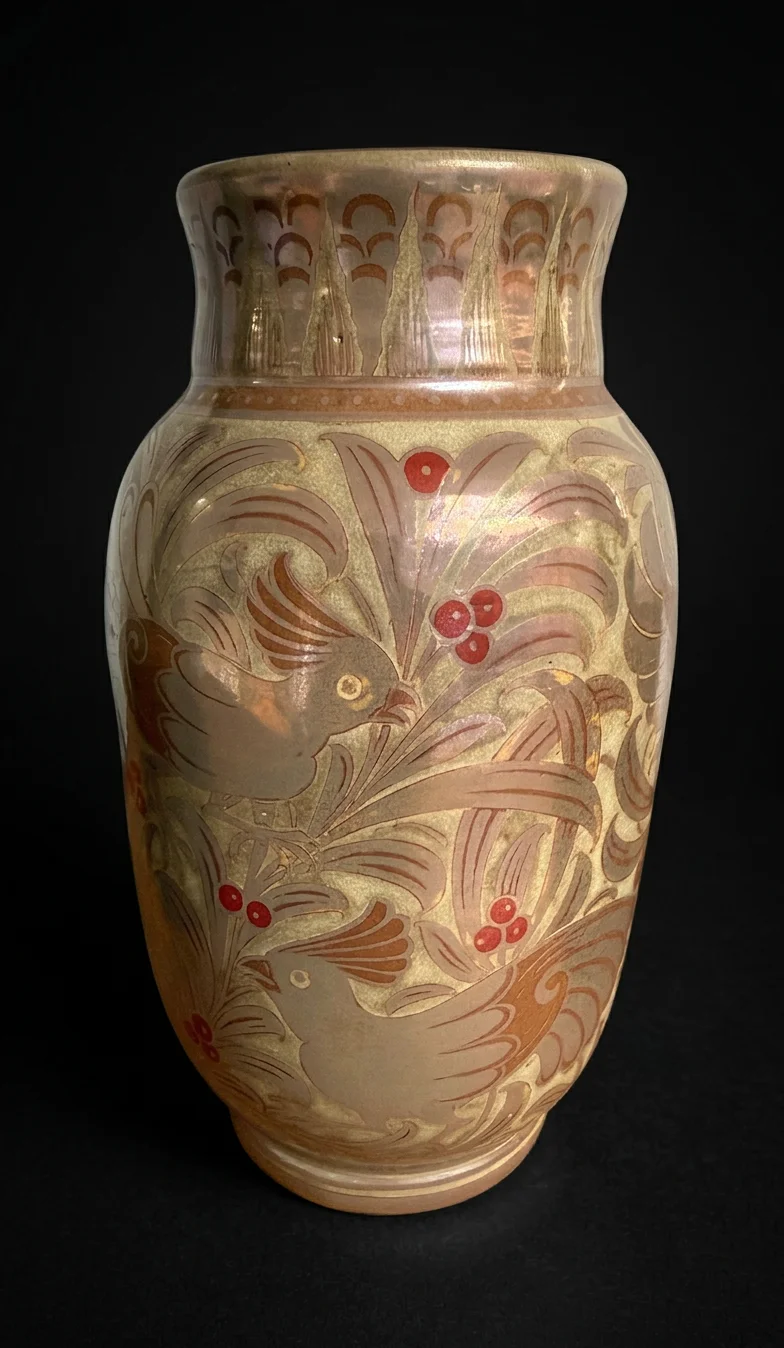
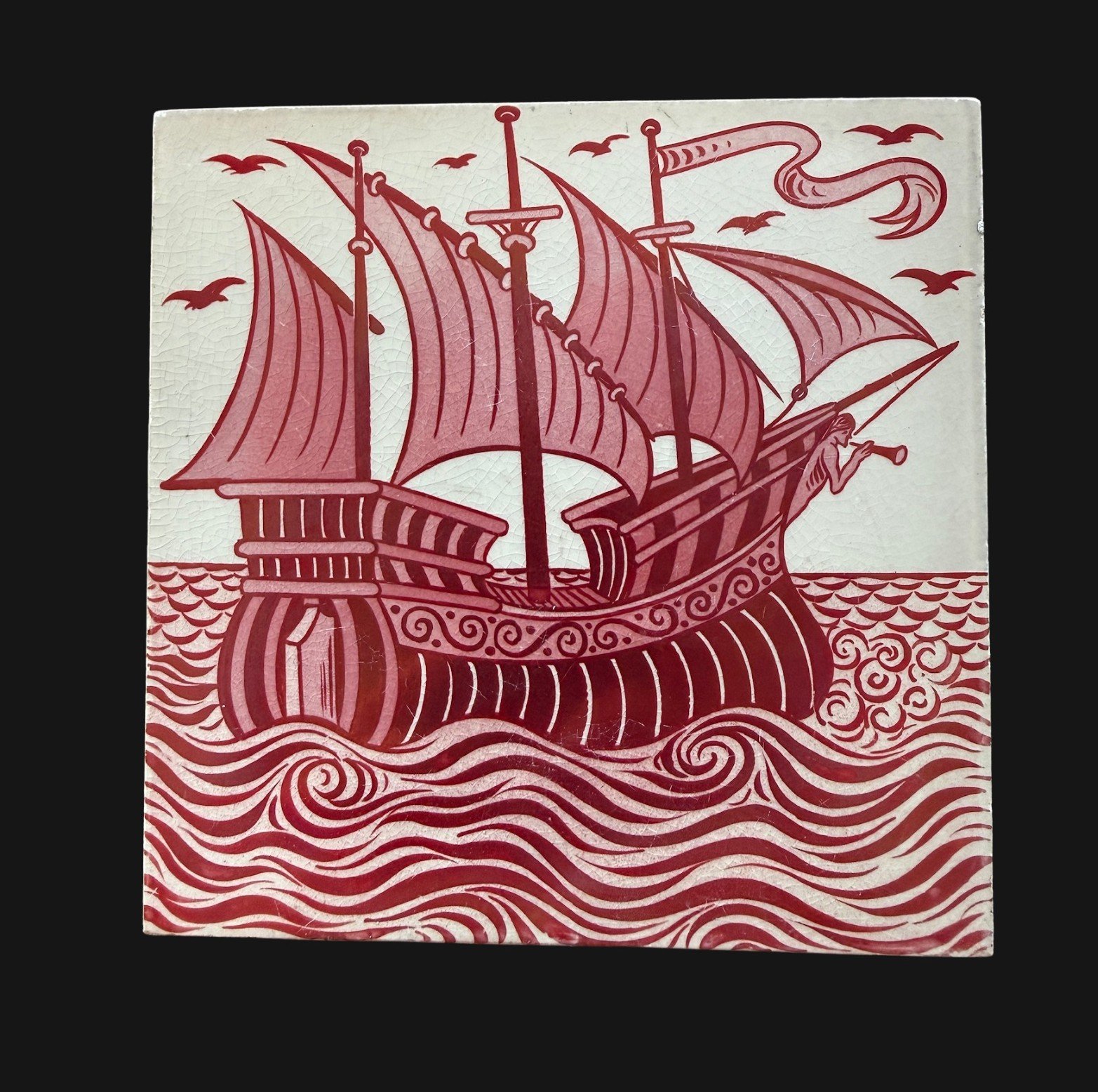


A guide to William De Morgan
De Morgan's potteries
De Morgan worked with William Morris, designing tiles and stained glass for Morris & Co. in the 1860s, and was a founder member of the Arts and Crafts Exhibition Society. His pottery moved several times, and the period a piece comes from affects both its character and its value.
Fitzroy Square (c.1869–1872). De Morgan began by decorating bought-in blanks, tiles from Holland and vessels from J.H. & J. Davis of Staffordshire, firing them in a kiln at the family home.
Chelsea (1872–1882). His first pottery, in Cheyne Row, with a showroom. Here he perfected his lustre technique and took on the painters Charles and Fred Passenger. Many pieces were still decorated on commercial blanks.
Merton Abbey (1882–1888). Larger works near Morris's Merton Abbey workshops in Surrey. De Morgan now made his own pots and tiles rather than relying on bought-in blanks, and his Persian-influenced designs developed.
Sands End, Fulham (1888–1907). His most productive period, at first in partnership with the architect Halsey Ricardo (1888–1898). Double and triple lustres reached their height here. From the 1890s De Morgan spent winters in Florence for his health, sending designs back to Fulham, and from 1898 the Passengers and Frank Iles were his partners.
De Morgan left the pottery in 1907 and became a best-selling novelist. The Passengers continued at Sands End until 1911, and from 1921 to 1933 ran the Bushey Heath pottery, producing Persian and lustre wares in the De Morgan tradition.
De Morgan tiles
Tiles were the backbone of De Morgan's business, made in their thousands for fireplaces, washstands, walls and ships. They remain the most accessible way to collect his work, from single tiles to large panels.
Subjects. Galleons on choppy seas, fantastic birds and beasts, fish, and flowers such as carnations, tulips and the Persian-style designs. Animals and galleons are generally the most sought after.
Colourways. The same design was often produced in several colourways, such as the green, blue or ruby lustre versions of a galleon or bird. Unusual colourways add to the interest.
Sizes. Most tiles are 6 inches (about 15cm) square. Larger 8-inch and 9-inch tiles are rarer.
Panels. Designs made up of several tiles, such as the Mongolian, Manchester or galleon panels, are the most decorative and command the highest prices.
BBB tiles. A popular repeating floral design, often used in multiples. The name comes from Barnard, Bishop & Barnards, the Norwich ironfounders whose fireplaces they were made for.
Blanks. Early tiles were often painted on commercial blanks from makers such as Wedgwood or Architectural Pottery, which can be identified from the back.
Lustre and the Persian palette
De Morgan's glazes fall into two main families.
Lustre. De Morgan rediscovered the technique of metallic lustre, used in medieval Islamic and Renaissance Italian pottery. Fired in a reducing kiln, copper or silver is transmuted into the surface of the glaze, giving a metallic sheen that shimmers as the light moves. Because the lustre is part of the glaze itself, it does not rub away.
Ruby lustre is the classic De Morgan colour, a deep red that can flash gold.
Double and triple lustre pieces combine two or three metallic colours, such as ruby, gold and silver. They are much harder to fire and are among his most prized wares.
Moonlit and Sunset suites were late lustre colour schemes in silver, gold and copper tones.
Persian palette. Inspired by Iznik and Persian pottery, these pieces use turquoise, cobalt and green with touches of manganese purple, often on a white ground. Vases, jugs, chargers and tiles in this palette are often decorated with flowers, fish and fantastic beasts.
The painters
De Morgan designed the pieces, but most were painted by a small team of skilled decorators, who often added their initials beside the factory mark. A painter's mark helps to date a piece and adds to its interest.
Charles Passenger (CP) and Fred Passenger (FP) – De Morgan's principal painters from the Chelsea years, later his partners and the founders of Bushey Heath.
Joe Juster (JJ) – known for vigorous lustre work, including peacocks and fish.
James Hersey (JH), Halsey Ricardo and others also designed or painted for the pottery.
Pieces painted by Fred Passenger after De Morgan's retirement, including Bushey Heath wares, are collected in their own right.
Marks and dating
De Morgan marks are less consistent than Martin Brothers marks, and many pieces, especially early tiles, are unmarked. The mark, the blank and the painter's initials together usually place a piece in its period:
Chelsea, 1872–1882: impressed W. DE MORGAN, sometimes with a Chelsea address; many pieces unmarked or on marked commercial blanks.
Merton Abbey, 1882–1888: impressed W. DE MORGAN & CO, MERTON ABBEY, often with an abbey motif.
Early Fulham (Sands End), 1888–1897: impressed circular SANDS END POTTERY, FULHAM mark; painted DM with a tulip; painted W.D.M. FULHAM.
Late Fulham, 1898–1907: impressed DM 98 and other marks of the partnership with the Passengers and Frank Iles.
Painters' initials (CP, FP, JJ and others) are usually painted beside the mark.
Condition, restoration and value
De Morgan's earthenware is softer than stoneware, and can chip easily. Chips to rims and tile edges, glaze frits and crazing are common. Any restoration reduces the value of De Morgan significantly, so original condition is well worth paying for. Good modern restoration is extremely hard to detect. It can be invisible to the eye and to the touch, and often only a specialist with the right experience and equipment will find it.
Auction houses frequently lack this specialist knowledge, and their condition reports can miss restoration altogether. We strongly advise anyone buying De Morgan, especially at auction, to have the piece examined by a specialist first.
The things that most affect value:
Lustre quality. A strong, even lustre that flashes well is worth far more than a weak or poorly fired one. Double and triple lustres are the most prized.
Subject. Galleons, fantastic beasts, birds and animals are more sought after than purely floral designs.
Size and form. Large chargers, vases and multi-tile panels command the highest prices.
Condition. Firing faults are accepted by collectors. Later damage and restoration reduce value and must be disclosed.
Painter and provenance. A known painter's mark, exhibition history or documented commission adds interest.
Every piece AD Antiques sells is guaranteed as described, with all condition issues reported, including invisible restoration.
Buying and selling De Morgan with AD Antiques
Buying. Our current De Morgan stock is shown above, and our archive holds hundreds of tiles and pieces we have sold, a useful reference for collectors. Every piece is guaranteed as described, with complimentary packing, fully insured worldwide shipping and a 14-day money-back guarantee.
Selling. We buy single tiles, pieces and whole collections, with immediate settlement and no vendor's commission.
Buying at auction? We act as agent for private collectors, inspecting pieces before the sale, reporting on condition and restoration, and bidding on your behalf. See our specialist services.
To discuss a piece, email alison@adantiques.com or call +44 7811 783518.
Further reading
Martin Greenwood, The Designs of William De Morgan (Richard Dennis and William E. Wiltshire III, 1989), a catalogue of De Morgan's designs in the Victoria and Albert Museum.
Jon Catleugh, William De Morgan Tiles (Trefoil Books, 1983), with essays by Elizabeth Aslin and Alan Caiger-Smith.
William Gaunt and M.D.E. Clayton-Stamm, William De Morgan (London, 1971).
The De Morgan Foundation, whose collection of William and Evelyn De Morgan's work is on show at the De Morgan Museum at Cannon Hall, Barnsley.
The Victoria and Albert Museum, which holds around 300 tiles, vases and dishes by De Morgan.
William De Morgan and His Fantastic Creatures, Holburne Museum, Bath, January to May 2027, which will include three pieces from AD Antiques.
Frequently asked questions
How do I know if my tile is by William De Morgan?
Look at the back for an impressed or painted mark, and at the blank itself. Many genuine tiles are unmarked, and later copies exist, so it is worth having an expert look. We are happy to look at photographs.
How much is a William De Morgan tile worth?
Single tiles range from a few hundred pounds to several thousand for rare designs, fine lustre or unusual colourways. Panels and large lustre pieces can be worth considerably more.
What is the difference between Persian and lustre De Morgan?
Persian wares are painted in turquoise, blues and greens inspired by Iznik pottery. Lustre wares have a metallic sheen, most famously ruby red.
Do you buy William De Morgan?
Yes. We buy single tiles, pieces and whole collections, with immediate payment and no commission.
Can you value my De Morgan collection?
Yes. We provide written valuations for insurance and probate, from £200.
A Perfect Gift for the Pottery Enthusiast in your life…. or a hint to those who find you difficult to buy for!
Any denomination can be produced and can be used in full or part payment to any item on the site.
The voucher can either be emailed or a physical copy posted.